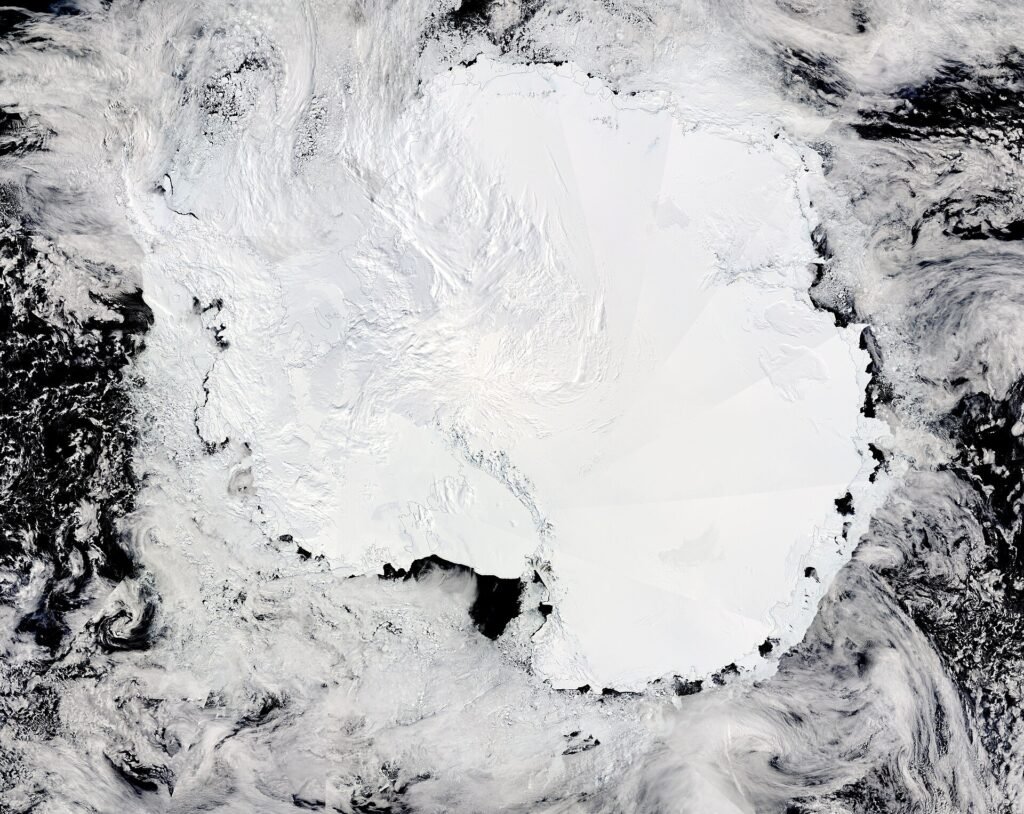
Antarctica is the fifth-largest continent. It lies around the South Pole, and an ice sheet covers about 98 percent of it. It is the coldest and windiest continent, and only scientists and technicians live there, at research stations. A 1959 treaty reserves the continent for peaceful use.
Key facts
- Area: about 14.2 million square kilometers (5.5 million square miles) (Britannica).
- Ice: an ice sheet covers about 98 percent of the land (U.S. Antarctic Program).
- Coldest temperature ever recorded on Earth: minus 89.2 degrees Celsius (minus 128.6 degrees Fahrenheit), at Vostok Station on July 21, 1983 (World Meteorological Organization).
- Highest peak: Vinson Massif, 4,892 meters (16,050 feet) (Britannica).
- Antarctic Treaty: signed December 1, 1959 by twelve countries, now with 58 Parties (Antarctic Treaty Secretariat).
Where is Antarctica and how big is it?
Antarctica is the world’s southernmost continent, covering about 14.2 million square kilometers (5.5 million square miles) (Britannica). NASA ranks it as the fifth-largest of the seven continents (NASA). Other sources round the area to roughly 14 million square kilometers (U.S. Antarctic Program).
Scientists split the continent in two. East Antarctica is mostly a high plateau covered by ice. West Antarctica is a group of mountainous islands, also buried under ice (Britannica). Our seven continents and hemispheres pages show where it sits.
How cold and windy is Antarctica?
Antarctica holds the lowest temperature ever recorded on Earth, minus 89.2 degrees Celsius (minus 128.6 degrees Fahrenheit). A thermometer at Vostok Station measured it on July 21, 1983 (World Meteorological Organization).
Some lists show minus 89.4 degrees Celsius. The WMO archive says that value was probably a unit conversion error (World Meteorological Organization).
The warmest temperature recorded on the continent is 17.5 degrees Celsius (63.5 degrees Fahrenheit). It was measured at Esperanza Base on March 24, 2015 (World Meteorological Organization).
NASA gives the South Pole’s average summer temperature as about minus 28 degrees Celsius (minus 18 degrees Fahrenheit). It gives the average winter temperature as minus 60 degrees Celsius (minus 76 degrees Fahrenheit) (NASA Science). The South Pole is colder than the North Pole, and NASA explains why. It says, “The South Pole is found over icy land, rather than over sea ice, helping to make it colder” (NASA Science).
Wind adds to the cold. Strong katabatic winds can exceed 100 kilometers per hour for days at a time (Australian Antarctic Division). NASA says Antarctica has six months of daylight in its summer and six months of darkness in its winter (NASA Space Place). Earth’s tilt causes this, as our page on what causes the seasons explains.
Is Antarctica a desert?
Yes, Antarctica is a desert because it gets very little rain or snow (NASA Space Place). Deserts are defined by dryness, not heat. Over the high plateau, yearly snowfall adds up to less than 50 millimeters of water. That is under 2 inches (Australian Antarctic Division).
What is under all that ice?
The ice sheet is nearly 4.9 kilometers (3 miles) thick at its thickest point. If all of it melted, sea level would rise about 58 meters (190 feet) (National Snow and Ice Data Center). Snow in Antarctica does not melt. It piles up for hundreds and thousands of years and turns into thick ice (NASA Space Place).
Many pages say Antarctica alone holds about 70 percent of Earth’s fresh water. The National Snow and Ice Data Center gives over 68 percent for both the Antarctic and Greenland ice sheets together (National Snow and Ice Data Center). So the 70 percent figure belongs to both ice sheets together, not to Antarctica alone.
Mountains rise through the ice. The tallest is Vinson Massif, 4,892 meters (16,050 feet), in the Sentinel Range of West Antarctica (Britannica). Mount Erebus on Ross Island is a volcano 3,794 meters (12,448 feet) tall. It is the southernmost active volcano on Earth, and its lava lake has been active since at least 1972 (Smithsonian Global Volcanism Program).
Ice also stretches out over the sea as an ice shelf. The Ross Ice Shelf covers about 472,000 square kilometers (182,000 square miles), roughly the size of Canada’s Yukon Territory. James Clark Ross first saw it in 1841 (Britannica).
What animals live in Antarctica?
Most Antarctic animals live in or near the sea, and krill feeds many of them. Krill are tiny shrimp-like animals. The Australian Antarctic Division says, “Nearly everything in Antarctica has krill for dinner.” Penguins, some seals and humpback and blue whales eat krill. Leopard seals eat penguins and other seals (Australian Antarctic Division).
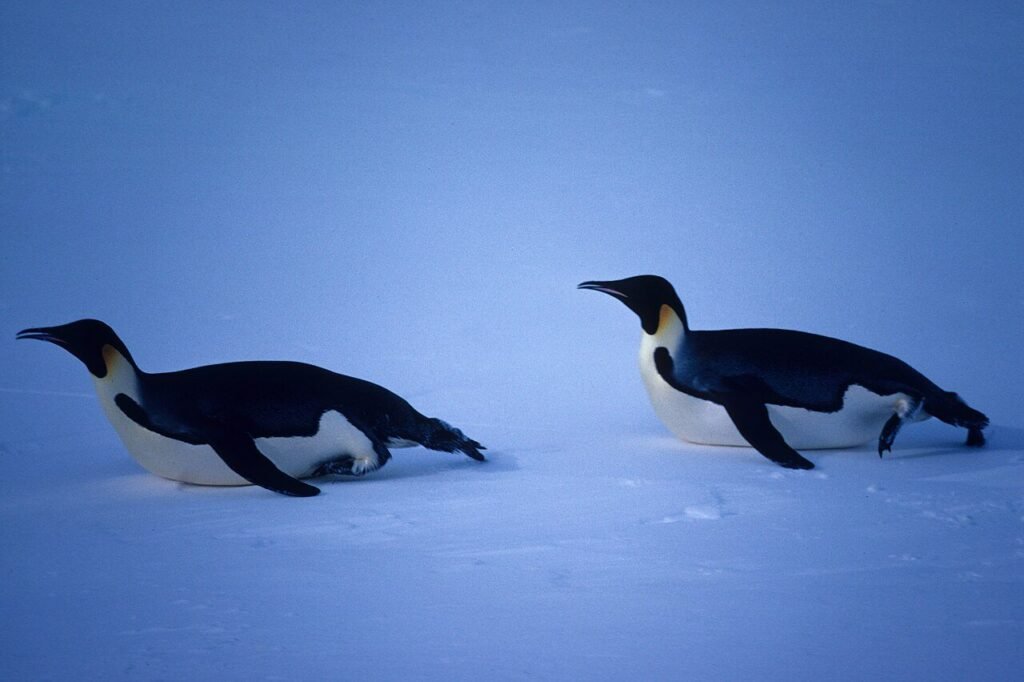
The British Antarctic Survey counts six major penguin species in the Antarctic region. Only two, the Emperor and the Adélie, are truly native to the continent itself (British Antarctic Survey). Emperor penguins are the only animals that breed during the Antarctic winter. Only the males incubate the eggs. Huddling can cut heat loss by as much as 50 percent (Australian Antarctic Division). Our animal adaptation page covers how animals fit cold homes.
There are no polar bears in Antarctica. Polar bears live within the Arctic Circle, at the other end of the world (NOAA).
Life on land is small. Antarctica has no trees or bushes, and only lichens, mosses and algae grow there (NASA Space Place). The Antarctic Sun calls a wingless midge, Belgica antarctica, Antarctica’s largest land animal. It does not grow much bigger than a fingernail. Its larvae are frozen for about eight months of each year (The Antarctic Sun).
Who lives in Antarctica, and who owns it?
The only human residents of Antarctica are scientists and technicians at research stations (Smithsonian Ocean Portal). NASA says the continent is too cold for people to live there for a long time (NASA). Up to 10,000 scientists from 18 countries live there in summer, and about 1,000 stay for winter (British Antarctic Survey).
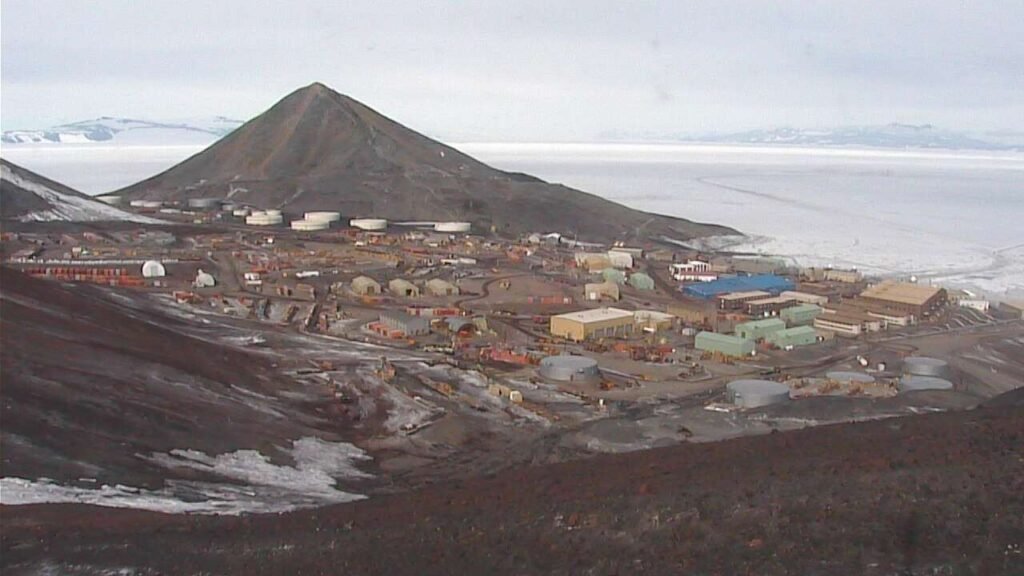
Antarctica is a continent, not a country, and no one nation owns it (Australian Antarctic Division). Seven countries held territorial claims when the Antarctic Treaty was signed: Argentina, Australia, Chile, France, New Zealand, Norway and the United Kingdom (Australian Antarctic Division).
Twelve countries signed the treaty on December 1, 1959, and it took effect in 1961. Article I says, “Antarctica shall be used for peaceful purposes only.” The treaty now has 58 Parties, so older counts of 50 or 53 are out of date (Antarctic Treaty Secretariat).
Who explored Antarctica first?
No one can say for sure who first saw Antarctica, because Britannica calls the question “controversial” (Britannica). In January 1773, James Cook became the first recorded European navigator to cross the Antarctic Circle. He never sighted land (Royal Museums Greenwich).
In 1820, three explorers may have sighted Antarctica. Fabian von Bellingshausen saw a landlike mass of ice on January 27. Edward Bransfield saw land on January 30. On November 18, Nathaniel Palmer clearly saw the mainland peninsula (Britannica).
James Weddell sailed to 74 degrees 15 minutes south on February 20, 1823, a farthest-south record. Roald Amundsen reached the South Pole in December 1911. Robert Scott’s team arrived on January 17, 1912, and found Amundsen’s tent. Scott and his companions died on the way back (Royal Museums Greenwich).
Think about it.
- The plateau gets less than 50 millimeters of water in snow a year, yet the ice is miles thick. How can both be true?
- Why is the South Pole colder than the North Pole?
- Scientists from many countries share the continent. Why might a treaty help them work together?
Answers
The snow never melts, so it piles up for thousands of years. The South Pole sits over high, icy land. Shared rules help scientists cooperate.
Keep exploring in our geography section. Read more records on our surprising geography facts page. Meet more travelers on our explorers page.
Sources
- Britannica. Antarctica
- Britannica. Antarctica: History
- Britannica. Vinson Massif
- Britannica. Ross Ice Shelf
- World Meteorological Organization. Lowest Temperature, Antarctica
- World Meteorological Organization. WMO concludes evaluation of possible new record Antarctic temperature
- Smithsonian Ocean Portal. The Arctic and The Antarctic
- National Snow and Ice Data Center. Ice Sheet Quick Facts
- NASA. Frequently Asked Questions About Antarctica
- NASA Science. Which Pole Is Colder?
- NASA Space Place. What Is Antarctica?
- U.S. Antarctic Program. About the Continent
- The Antarctic Sun, U.S. Antarctic Program. Insects in the Extreme
- Smithsonian Global Volcanism Program. Erebus
- Australian Antarctic Division. Antarctic weather
- Australian Antarctic Division. Antarctic food web
- Australian Antarctic Division. Emperor penguin
- Australian Antarctic Division. Who owns Antarctica?
- British Antarctic Survey. Antarctic factsheet
- British Antarctic Survey. Antarctic wildlife
- NOAA. Animals of the Ice: Polar Bears
- Royal Museums Greenwich. History of Antarctic explorers
- Antarctic Treaty Secretariat. The Antarctic Treaty