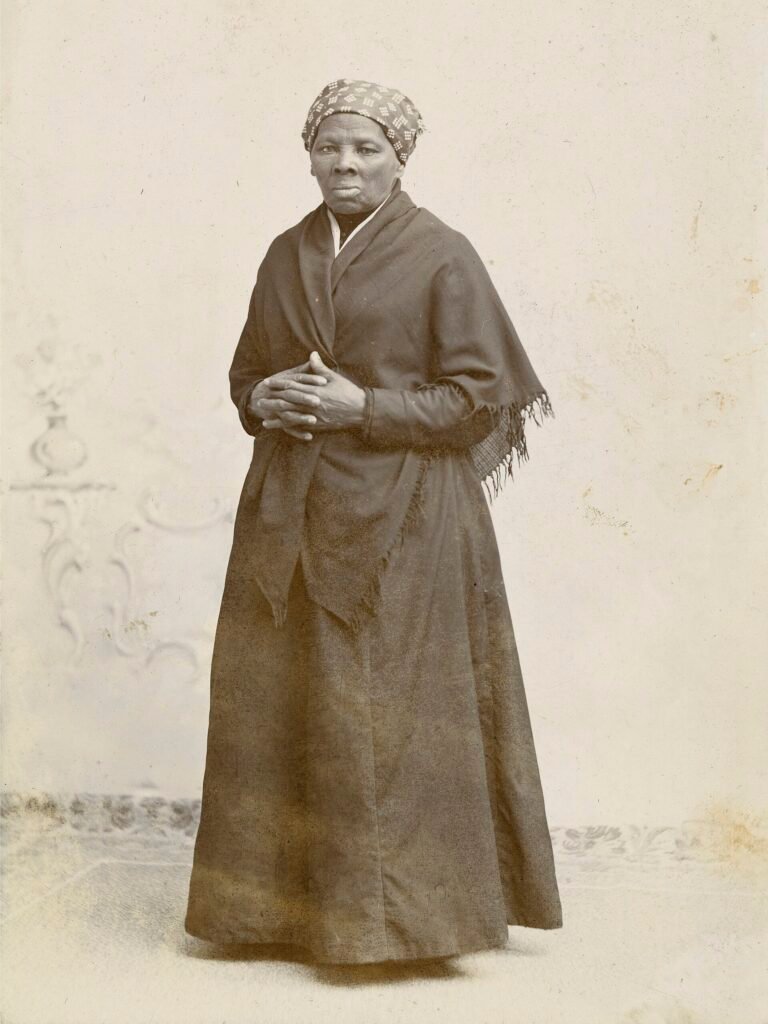
Harriet Tubman escaped slavery in 1849 and led about 70 family members and friends to freedom. No birth record exists, so sources give her birth year as about 1822. In the Civil War she served the Union Army as a scout, spy and nurse. Later she worked for women’s right to vote.
Key facts
- Born in early 1822 in Dorchester County, Maryland, and named Araminta Ross (National Park Service).
- Escaped slavery in fall 1849 and found freedom in Philadelphia, Pennsylvania (National Park Service).
- Made about 13 trips to Maryland between 1850 and 1860 and led about 70 people to freedom (National Park Service).
- Took part in the Combahee River Raid of June 1 and 2, 1863, which freed more than 750 people (National Park Service).
- Died of pneumonia on March 10, 1913, in Auburn, New York (National Park Service).
When and where was Harriet Tubman born?
Harriet Tubman was born in early 1822 in Dorchester County, Maryland. The National Park Service points to a March 15, 1822, account book entry showing $2 paid to a midwife for her mother, Rit (National Park Service). The park service calls it “most likely Araminta’s birth,” and an 1849 notice gave her age as about 27. The exact day is unknown (National Park Service).
Some sources say she was born around 1820 on Edward Brodess’s farm in Bucktown, but the park service lists both as myths. It says she was born on Anthony Thompson’s plantation at Peter’s Neck, and her family moved to Bucktown later (National Park Service fact sheet).
Her parents, Ben and Harriet “Rit” Ross, named her Araminta, and her family called her Minty. She took the name Harriet sometime in the 1840s (National Park Service fact sheet). You can read about other notable people in our biographies section.
What was Harriet Tubman’s childhood like?
Tubman spent her childhood enslaved, which means other people claimed to own her and forced her to work without pay. Her parents had nine children, and three of her older sisters were sold to the Deep South. By age six, Tubman was rented out to other enslavers and separated from her mother (National Park Service).
When she was about 13, she refused to help an overseer, a person hired to control enslaved workers, stop a person who was trying to escape (National Park Service). The overseer threw a two-pound weight. It hit Tubman in the head and almost killed her, and she had sleeping spells for the rest of her life (National Park Service).
In about 1844 she married John Tubman, a free man who was not enslaved (National Park Service). Under slavery, any child she had would have belonged to her enslaver, not to her or her husband (National Park Service fact sheet).
How did Harriet Tubman escape slavery?
Tubman escaped in fall 1849 and found freedom in Philadelphia, Pennsylvania (National Park Service). Her enslaver, Edward Brodess, died in March 1849, and his widow had debts, so some enslaved people would be sold. Tubman did not want to be sold away from her family (National Park Service).
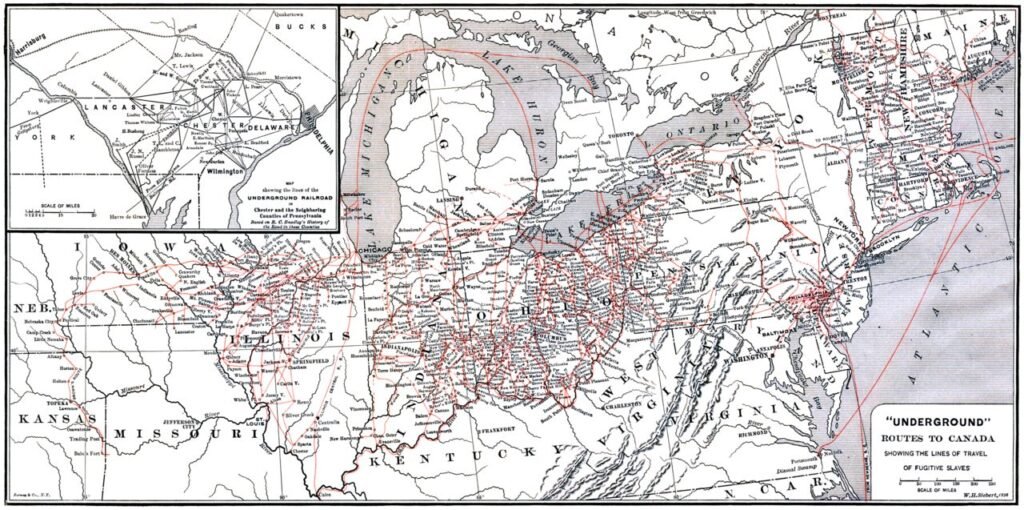
The Smithsonian says she set out on September 17, 1849, with two of her brothers. The brothers turned back, and Tubman finished the trip alone (Smithsonian NMAAHC). On October 3, 1849, a notice offered $100 each for the return of “Minty” and her brothers “Ben” and “Harry” if they were caught outside Maryland (National Park Service fact sheet).
How many people did Harriet Tubman free?
Tubman made about 13 trips to Maryland between 1850 and 1860 and led about 70 family members and friends to freedom. She gave directions to about 70 more people who escaped on their own (National Park Service fact sheet).
Tubman helped her niece Kessiah and Kessiah’s two children escape in 1850, led three of her brothers north on Christmas Day 1854, and brought away her aging parents in 1857 (Maryland Department of Natural Resources). She returned only to Maryland, which she knew well (National Park Service fact sheet).
These trips were part of the Underground Railroad. The National Park Service defines it as “the resistance to enslavement through escape and flight” and says “freedom seeker” is more accurate than “runaway” (National Park Service).
The Fugitive Slave Act of 1850 made escape harder. The National Park Service says the law, signed on September 18, 1850, required that freedom seekers be “returned to their enslavers without due process.” Anyone who knowingly blocked a capture faced a $1,000 fine and up to six months in prison (National Park Service). Our US history pages cover this period.
At a suffrage convention in 1896, Tubman said, “I never ran my train off the track and I never lost a passenger,” according to the Smithsonian (Smithsonian NMAAHC).
What did Harriet Tubman do in the Civil War?
During the Civil War, Tubman served the United States Army as a spy, scout, nurse and cook (National Park Service). In early 1862 she went to South Carolina to nurse Black soldiers and civilians and to scout behind enemy lines (National Park Service).
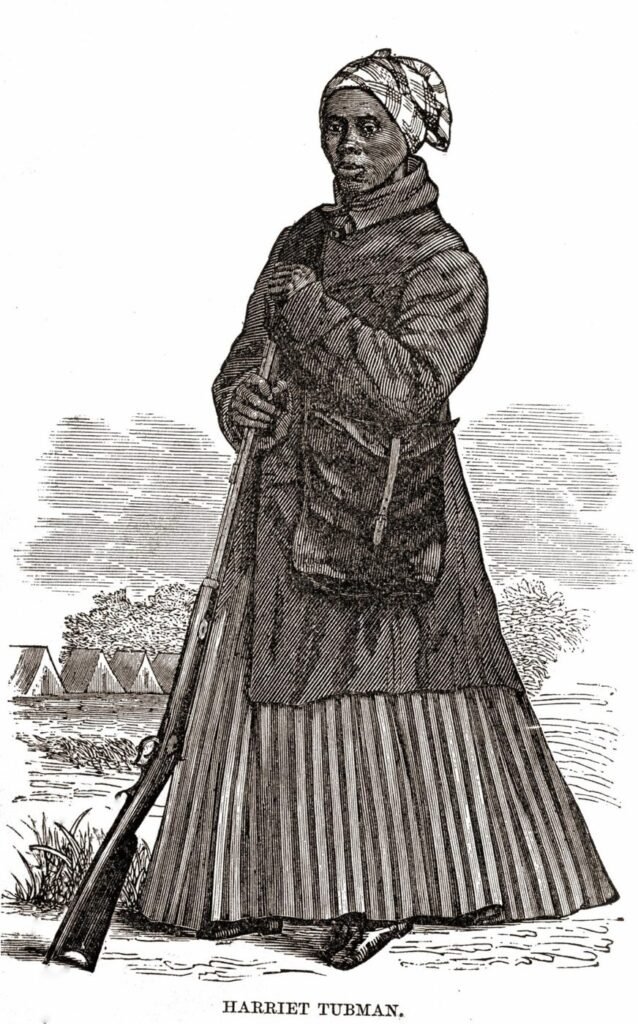
On June 1 and 2, 1863, Colonel James Montgomery and about 300 soldiers sailed from Beaufort on three gunboats to raid plantations along the Combahee River, and Tubman went along (National Park Service). When the boats arrived, enslaved people ran and swam toward them, and Tubman helped get them aboard. More than 750 people were freed, and seven plantations were destroyed (National Park Service). Another park service page says more than 700 (National Park Service).
The National Park Service calls her the first woman to plan and lead an armed raid in U.S. military history (National Park Service).
Which stories about Harriet Tubman are myths?
The National Park Service lists several popular Tubman stories as myths, including 300 rescues, a quilt code and a $40,000 bounty (National Park Service fact sheet).
- The 300 people myth. Many sources say Tubman rescued 300 people in 19 trips, but Sarah Bradford printed inflated numbers in her 1868 biography. Records show about 70 people in about 13 trips, and in 1858 and 1859 Tubman herself said 50 to 60 people in eight or nine trips (fact sheet).
- The quilt code myth. Some stories say Tubman used a quilt code. The park service says “the quilt code is a myth.” She relied on trusted helpers, rivers and the stars (fact sheet).
- The $40,000 bounty myth. The only known reward is the October 1849 notice for $100 each. The park service says Sallie Holley made up the $40,000 figure in an 1867 newspaper letter (fact sheet).
Try this: pick a story about a historical figure and find out who first wrote it. Teachers can find ideas in our social studies lesson plans.
What did Harriet Tubman do after the war, and how did she die?
Tubman lived in Auburn, New York, worked for women’s right to vote, and died of pneumonia on March 10, 1913 (National Park Service). In 1859 she bought a house there from William H. Seward, and she later co-founded the National Association of Colored Women (National Park Service). In 1869 she married Nelson Davis, a Civil War veteran, and in 1874 they adopted a girl named Gertie (Maryland Department of Natural Resources).
In 1896 she bought 25 acres next to her home to start a home for aged, poor and sick African Americans. In 1903 she gave the land to the African Methodist Episcopal Zion Church, and the Tubman Home opened in 1908 (Maryland Department of Natural Resources).
After the war Tubman received a pension as the widow of Nelson Davis. In 1899 Congress raised it to $20 a month for her own service as a nurse (National Archives).
Counting from 1822, Tubman was about 91 when she died. She was buried with military honors at Fort Hill Cemetery in Auburn (National Park Service). The Smithsonian holds her 1876 hymn book and a lace shawl from Queen Victoria (Smithsonian Institution).
More biographies: Patricia Cowings and Valentina Tereshkova.
Sources
- National Park Service. Harriet Tubman
- National Park Service. Harriet Tubman, Underground Railroad National Historical Park
- National Park Service. Determining Harriet Tubman’s Birth Year
- National Park Service. Myths and Facts About Harriet Tubman
- National Park Service. What is the Underground Railroad?
- National Park Service. The Fugitive Slave Laws and Boston
- National Park Service. We Called Ourselves Combee
- Maryland Department of Natural Resources. Harriet Tubman Underground Railroad State Park timeline
- National Archives. Claim of Harriet Tubman
- Smithsonian National Museum of African American History and Culture. Harriet Tubman: Life, Liberty and Legacy
- Smithsonian Institution. Harriet Tubman Collection Unveiled