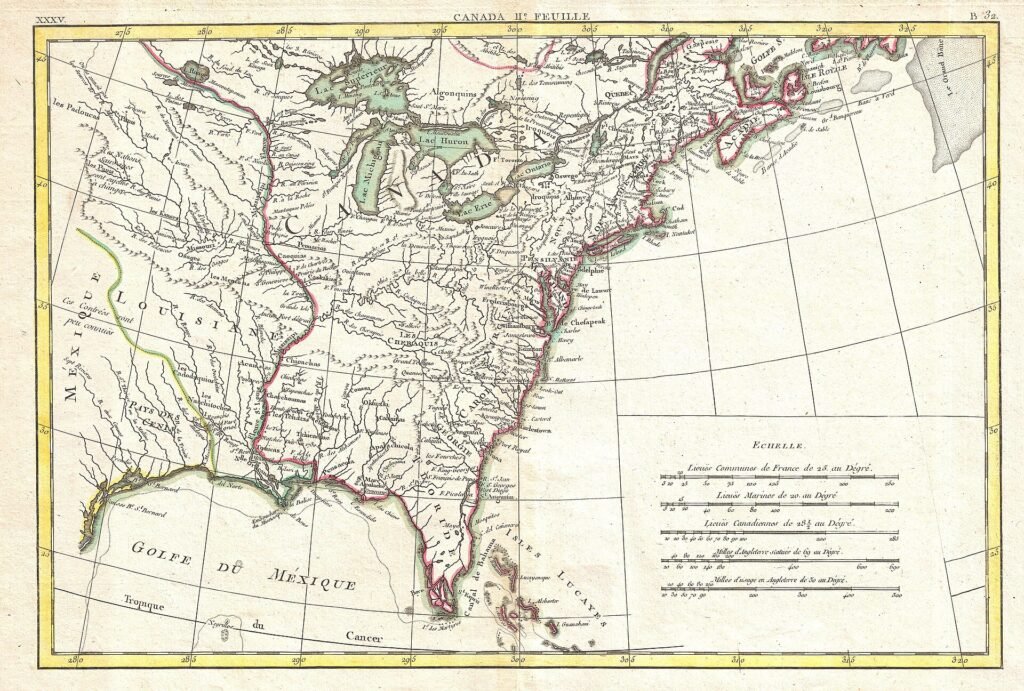
The thirteen colonies were the English colonies on the Atlantic coast of North America that later became the first thirteen states of the United States. They were founded between 1607 and 1732, from Jamestown, Virginia, to Georgia. Historians group them into three regions: New England, the Middle colonies, and the Southern colonies.
Key facts
- Virginia came first. English settlers reached Jamestown in 1607 (National Park Service).
- Georgia came last. King George II signed its charter on April 21, 1732 (Georgia Historical Society).
- The regions hold four New England colonies, four Middle colonies, and five Southern colonies.
- In 1619 Virginia held its first representative assembly, and the first documented Africans were forcibly brought to the colony (National Park Service).
- By the end of the colonial period, about 500,000 Black people lived in the colonies, nearly 20 percent of the population (New Jersey State Library).
- Delaware was the first state to ratify the Constitution, on December 7, 1787 (National Park Service).
What were the thirteen colonies?
The thirteen colonies were thirteen separate colonies, each founded at a different time and for different reasons. A colony is land settled and governed by people from another country. Here that country is England. English kings gave groups of settlers a written permission called a charter. A charter named the land and the rules for settling it. This page covers England’s thirteen Atlantic colonies and does not cover other colonies in North America.
The colonies stretched along the coast from what is now New Hampshire to Georgia. Historians sort them into three regions by location (World History Encyclopedia). Some books place Virginia and Maryland in their own Chesapeake group, named for the bay between them. You can explore more of this period in our US history section.
When was each of the thirteen colonies founded?
Virginia was founded first, in 1607, and Georgia was chartered last, in 1732. That is about 125 years between the first and the last. The National Park Service says of Jamestown: “The settlement became the first permanent English settlement in North America.”
Many colonies have more than one date. A charter year can differ from the year settlers arrived. The table gives the main dates for each colony.
| Region | Colony | Founding | What happened |
|---|---|---|---|
| New England | Massachusetts | 1620 and 1630 | Plymouth Colony began in December 1620 (Pilgrim Hall Museum). The Massachusetts Bay charter dates to 1629, and the Puritans who founded Boston arrived in 1630 (Massachusetts Commonwealth Museum). |
| New England | New Hampshire | 1623 | Captain John Mason sent settlers to start a fishing colony at the mouth of the Piscataqua River. In 1679 it became a royal province, a colony governed directly by the Crown (State of New Hampshire). |
| New England | Connecticut | 1634 to 1636 | Settlers from Massachusetts founded Wethersfield in 1634. Thomas Hooker led a group that founded Hartford in 1636 (Connecticut Secretary of the State). |
| New England | Rhode Island | 1636 | Roger Williams founded Providence in June 1636 (Library of Congress). |
| Middle | New York | 1664 | English ships seized the Dutch province of New Netherland in 1664, and New Amsterdam became New York (New York State Archives). |
| Middle | New Jersey | 1664 | In June 1664 the Duke of York gave the land between the Hudson and Delaware rivers to two English noblemen (New Jersey State Archives). |
| Middle | Pennsylvania | 1681 | King Charles II granted William Penn a charter in March 1681 (Pennsylvania Historical and Museum Commission). |
| Middle | Delaware | 1638 | Swedish settlers built Fort Christina in 1638 (National Park Service). England took control in 1664, and the lower counties formed their own assembly in 1704 (Delaware Public Archives). |
| Southern | Virginia | 1607 | The Virginia Company funded the settlement at Jamestown (National Park Service). |
| Southern | Maryland | 1634 | Cecilius Calvert received the charter on June 20, 1632. Settlers landed on March 25, 1634 (Maryland State Archives). |
| Southern | North Carolina | 1663 | Charles II granted the Carolina charter to eight English noblemen in 1663. North Carolina became a royal colony in 1729 (NCpedia). |
| Southern | South Carolina | 1670 | Settlers arrived in April 1670 and named their town Charles Towne that November (National Park Service). |
| Southern | Georgia | 1732 | The charter was signed on April 21, 1732. The first colonists arrived at Yamacraw Bluff on February 12, 1733 (Georgia Historical Society). |
Why did people settle in the thirteen colonies?
People settled the colonies for different reasons, including profit, religion, and defense. The reasons depended on the colony and on who paid for it. This section does not cover every settler’s personal reasons for leaving home.
- Virginia: the Virginia Company, a business, funded the Jamestown settlement (National Park Service).
- Carolina: its owners planned it as a “planting and trading province,” according to the National Park Service.
- Massachusetts: the Puritans, a religious group from England, founded Boston under the 1629 charter (Massachusetts Commonwealth Museum).
- Rhode Island: the Library of Congress writes that “From its earliest settlement, Rhode Island was a refuge for people persecuted for their religious beliefs” (Library of Congress).
- Georgia: the plan shifted to settling “the deserving poor” to defend South Carolina and produce goods like wine and silk. The land lay between South Carolina and Spanish Florida (New Georgia Encyclopedia).
Earlier voyages by European sailors shaped these plans. You can read about them on our explorers page.
How did slavery shape the thirteen colonies?
Slavery existed in the colonies from 1619 and grew in both the North and the South. The National Park Service reports that the first documented Africans were forcibly captured and brought to Virginia in 1619 to work the tobacco fields. Enslaved people did not choose to come. This section gives examples and does not list every law.
Laws and records show how slavery spread:
- Massachusetts legalized slavery in 1641, according to the Smithsonian’s Searchable Museum.
- Maryland passed a law in 1664 that made enslaved people serve for life (Maryland State Archives).
- New Jersey’s earliest known record of enslaved people dates to 1680. In the North, enslaved people more often did non-farm work (New Jersey State Library).
- Historians estimate that nearly half of all Africans brought as enslaved people to what became the United States arrived in Charleston (National Park Service).
- Georgia’s Trustees banned slavery in 1735. Slavery was admitted to the colony in 1751 (New Georgia Encyclopedia).
Many people think slavery belonged only to the Southern colonies. The sources above show that Massachusetts and New Jersey also had enslaved people. When you study any colony, ask who worked there and who was not free.
Who already lived where the colonies were founded?
Native nations already lived where colonists settled. This section names only three examples and does not cover every nation. Roger Williams founded Providence on land given by the Narragansett, according to the Library of Congress. The Pilgrims settled at Patuxet in December 1620 (Pilgrim Hall Museum). Jamestown stood near the Powhatan (National Park Service).
Relations were not the same everywhere. On March 22, 1621, Massasoit and the Plymouth colonists reached a peace agreement (Library of Congress). Connecticut’s official timeline lists the Pequot War in 1637. Learn more on our pages about the Pilgrims and the Wampanoag.
How can you remember the thirteen colonies?
Sort the colonies by region and by founding year instead of memorizing thirteen names. Groups are easier to recall than a long list.
- Write each colony on its own card.
- Sort the cards into New England, Middle, and Southern piles.
- Check your piles against the table above.
- Line up the cards by founding year, from Virginia to Georgia.
Think about these questions. Which colonies have two founding dates, and why? Which region had the most colonies? Why might settlers choose a place near a river or a bay?
Teachers can find more classroom ideas in our social studies lesson plans.
Sources
- National Park Service. A Short History of Jamestown
- National Park Service. First State National Historical Park: Putting It All Together
- National Park Service. Charleston, South Carolina
- Library of Congress. Roger Williams, Rhode Island Founder
- Library of Congress. The Treaty That Made Thanksgiving
- Georgia Historical Society. James Edward Oglethorpe Timeline
- New Georgia Encyclopedia. Trustee Georgia, 1732-1752
- Maryland State Archives. Maryland at a Glance: Chronology
- Massachusetts Commonwealth Museum. The Charter of Massachusetts Bay, 1629
- Pilgrim Hall Museum. Plymouth Colony
- State of New Hampshire. New Hampshire Almanac: History
- Connecticut Secretary of the State. Selected Important Dates in Connecticut History
- New York State Archives. Charter of the Proprietary Colony from Charles II to the Duke of York
- New Jersey State Archives. Documentary Treasures: James, Duke of York, 1664
- New Jersey State Library. Unit 3: Colonial Era Slavery
- Pennsylvania Historical and Museum Commission. Pennsylvania’s Birthday and Penn’s Charter
- Delaware Public Archives. Colonial and Pre-Statehood Records
- World History Encyclopedia. Thirteen Colonies
- State Library of North Carolina. Colonial Period Overview, NCpedia
- National Museum of African American History and Culture. The Northern Colonies: Expanding Merchant Capital