Mesopotamia was an ancient region around the Tigris and Euphrates rivers, mostly in what is now Iraq. Its Greek name means “between two rivers.” People there built some of the world’s first cities, wrote on clay with cuneiform, and lived under kings, priests and written laws.
This page covers where Mesopotamia was, who lived there, how cities were ruled, what people believed, and what they wrote, built and counted.
Key facts
- The name Mesopotamia is Greek and means “between two rivers.”
- By around 3200 BCE, Uruk was the largest settlement in southern Mesopotamia, and possibly in the world. (BCE means “before the common era,” the same years as BC.)
- Sargon of Akkad built the first lasting Mesopotamian empire, starting around 2340 BCE.
- Hammurabi ruled Babylon from 1792 to 1750 BCE.
- Babylonian scribes used a base-60 number system, and we still divide the hour into 60 minutes.
- Cyrus the Great of Persia captured Babylon in 539 BCE.
Where was Mesopotamia and what does the name mean?
Mesopotamia was the land around the Tigris and Euphrates rivers, and its Greek name means “between two rivers.” It matches modern Iraq and parts of Iran, Syria, Kuwait and Turkey. People often call it the “cradle of civilization” (World History Encyclopedia). You can find it on a modern map in our world maps section.
Until about 2340 BCE, southern Mesopotamia was a patchwork of city-states. A city-state is a city that rules the land around it. Around 3400 to 3000 BCE, large buildings run by officials, the earliest known writing and advanced technology first appear together there (Getty Museum). Mark Altaweel of University College London writes that the region “was home to perhaps the world’s oldest cities and complex societies” (University College London).
By about 3200 BCE, Uruk was a city of huge mud-brick buildings. Painted clay cones formed mosaics on the walls (The Metropolitan Museum of Art).
Who lived in Mesopotamia and when?
Several peoples ruled Mesopotamia over some 3,000 years (Getty Museum).
- Sumer. Sumerian city-states each had their own ruler. The Early Dynastic period ran from about 2900 to 2350 BCE (The Metropolitan Museum of Art).
- Akkad. Sargon of Akkad built the first lasting empire around 2340 BCE (Getty Museum).
- Babylon. Hammurabi ruled Babylon from 1792 to 1750 BCE (The Metropolitan Museum of Art).
- Assyria. Assyrian kings held a strong empire from about 880 BCE until it fell in 612 BCE (Getty Museum).
In 539 BCE, Cyrus the Great of Persia captured Babylon. The Getty Museum says this ended native control of Mesopotamia (Getty Museum).
How were Mesopotamian cities governed?
Each early city had its own ruler, and rulers owed duties to the gods as well as to people. Sumerian myths said kingship “descended from heaven.” Texts from about 2700 BCE call rulers en (lord), lugal (king) or ensi (governor), depending on local tradition. A ruler led in battle, won the gods’ favor with temples and offerings, kept up walls and irrigation canals, and enforced justice (Getty Museum).
The king was also the chief builder. At a groundbreaking ceremony, he carried the first basket of bricks for a temple (Penn Museum). Temples were major landowners in Uruk (University College London). Around 2340 BCE, Sargon ended the patchwork of city-states with an empire that later kings tried to copy (Getty Museum).
What was the Code of Hammurabi?
The Code of Hammurabi is a collection of 282 legal judgements from Babylon, carved on a stone slab around 1750 BCE. The slab is called a stela. It is made of black basalt and stands more than 2.25 meters tall, or over 7 feet. French archaeologists found it at Susa, in Iran, in 1902. It has been in the Louvre museum in Paris since 1904 (Louvre Museum).
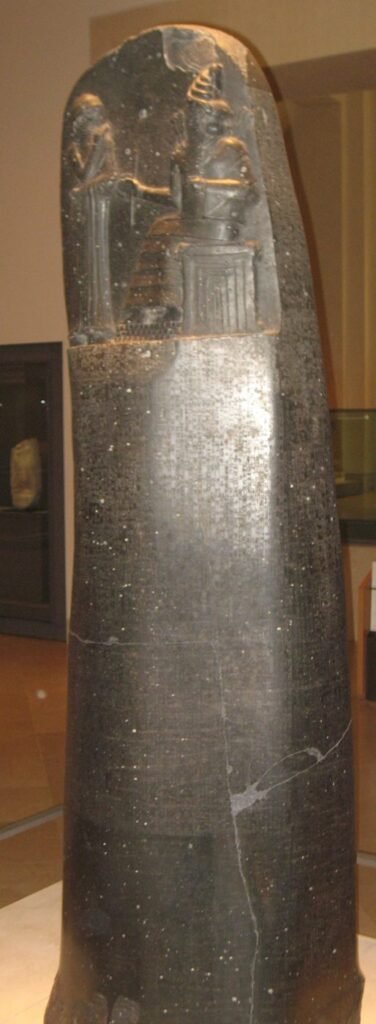
The Louvre says it is not a “legal code” in the modern sense. It is case law that shows how rulers delivered justice. Law 196 reads, “If a man put out the eye of another man, his eye shall be put out,” which sets a punishment in proportion to the harm (Louvre Museum). To learn how laws work today, visit our civics section.
How did people in Mesopotamia write?
People in Mesopotamia wrote by pressing wedge-shaped marks into clay, a system called cuneiform. Early signs were simple pictures that tracked goods and workers’ rations. Later, scribes pressed the tip of a reed or wooden stylus into the clay. About 6,000 early tablets are known from the Uruk area. One lists 120 officials, including leaders of the plow and of the lambs (The Metropolitan Museum of Art).
Students learned in school. They pressed the same wedge again and again, then copied stories and math problems. Women worked as scribes too (Penn Museum). To see how cuneiform compares with other scripts, read our page on the history of writing.
What did Mesopotamians believe about the gods?
Mesopotamians worshipped many gods, and each city honored a patron god in its main temple. Uruk honored An and Inanna, Nippur honored Enlil, and Eridu honored Enki (The Metropolitan Museum of Art). Ur honored Nanna, the moon god (Penn Museum).
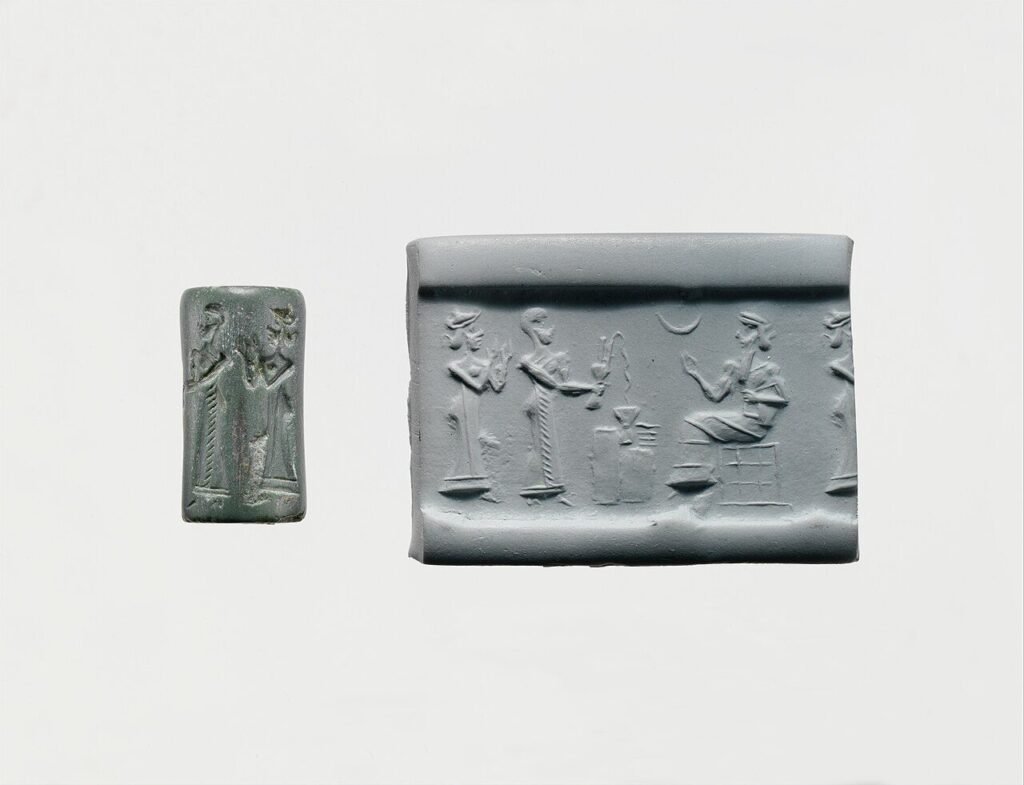
Priests ran the rituals in the great temples. Ordinary people prayed to personal gods at home (The Metropolitan Museum of Art). Belief changed over time, and Marduk became chief of the gods as Babylon gained power (The Metropolitan Museum of Art).
Around 2300 BCE, Sargon made his daughter Enheduanna high priestess of Nanna at Ur. She may be the first author known by name (Penn Museum).
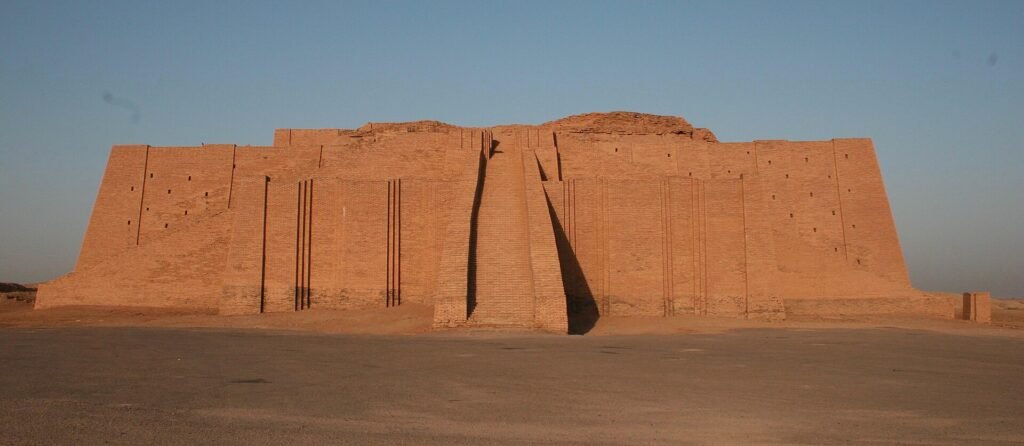
Some temples stood on huge stepped platforms called ziggurats. Builders were making them by the middle of the third millennium BCE. Scholars think ziggurats may have represented the high homes of the gods, but their actual meaning is unknown (The Metropolitan Museum of Art).
What did Mesopotamians know about math and astronomy?
Babylonian scribes counted in base 60 instead of base 10. The St Andrews math history site states, “The Babylonians divided the day into 24 hours, each hour into 60 minutes, each minute into 60 seconds.” Tablets from about 2000 BCE list the squares of numbers up to 59, and scribes used such tables to multiply (University of St Andrews). You can practice the same idea in our lesson on squares and square roots.
Babylonian astronomers kept careful sky records. Assyriologist Eleanor Robson calls their Astronomical Diaries “the longest-running and perhaps most important observational dataset from the ancient world.” The records cover several centuries (University College London).
What did Mesopotamians build and invent?
Mesopotamians built canals, brick cities, wheeled vehicles and farm tools. This list covers only what museums and universities document.
- Irrigation. Irrigation farming spread south along the rivers early in the sixth millennium BCE (The Metropolitan Museum of Art). Canals also moved goods and people between cities (University College London).
- The plow. Farmers sowed barley with an ox-drawn plow that dropped seed through a funnel (Penn Museum).
- The wheel. Potters used a fast wheel by the Uruk period (The Metropolitan Museum of Art). The Standard of Ur, made about 2550 to 2400 BCE, shows chariots pulled by wild donkeys called onagers (British Museum). These sources show wheels in use. They do not say who made the first wheel.
What was daily life like in Mesopotamia?
Daily life in a Mesopotamian city around 2000 BCE included work, school, games and music. Most evidence comes from cities such as Ur, so life elsewhere may have differed. Tablets show that up to 10,000 women wove cloth near Ur around 2000 BCE (Penn Museum).
Pay came in grain. Around 1800 BCE, a laborer earned about 10 liters of grain for a day of work (Penn Museum). Farmers grew barley because it handles salty soil better than wheat. They harvested it between mid-April and early May, and vendors sold roasted barley as a snack (Penn Museum).
Children likely played with clay boats and model chariots. Adults played the Royal Game of Ur, and builders probably scratched game boards into bricks. Lyres, flutes and drums gave people music (Penn Museum).
Try this: be a Mesopotamian scribe
- Flatten a piece of clay or modeling dough. Press the corner of a craft stick into it to make wedge marks. Make a short code that stands for the letters of your name.
- Look at a clock. How many seconds are in one hour? Multiply 60 by 60 to find out. Then talk about why a base-60 system might be handy for time.
Explore more ancient and medieval history in our world history section. For a later time and place with its own kings and laws, see medieval Europe.
Sources
- Getty Museum. Mesopotamia: Civilization Begins
- The Metropolitan Museum of Art. Uruk: The First City
- The Metropolitan Museum of Art. Mesopotamia, 8000-2000 B.C.
- The Metropolitan Museum of Art. List of Rulers of Mesopotamia
- The Metropolitan Museum of Art. The Origins of Writing
- The Metropolitan Museum of Art. Mesopotamian Deities
- The Metropolitan Museum of Art. Ur: The Ziggurat
- Louvre Museum. The Code of Hammurabi
- British Museum. The Standard of Ur (box)
- Penn Museum. Mesopotamian City Life: Four Thousand Years Ago (Expedition, 2018)
- Penn Museum. Sumerian Harvest Time (Expedition, 1963)
- Penn Museum. Ur Digitization Project: Item of the Month, June 2012
- University College London. Southern Mesopotamia: Water and the Rise of Urbanism
- University College London. Who Wrote the Babylonian Astronomical Diaries?
- University of St Andrews. An overview of Babylonian mathematics
- World History Encyclopedia. Mesopotamia: The Beginning of Beginnings